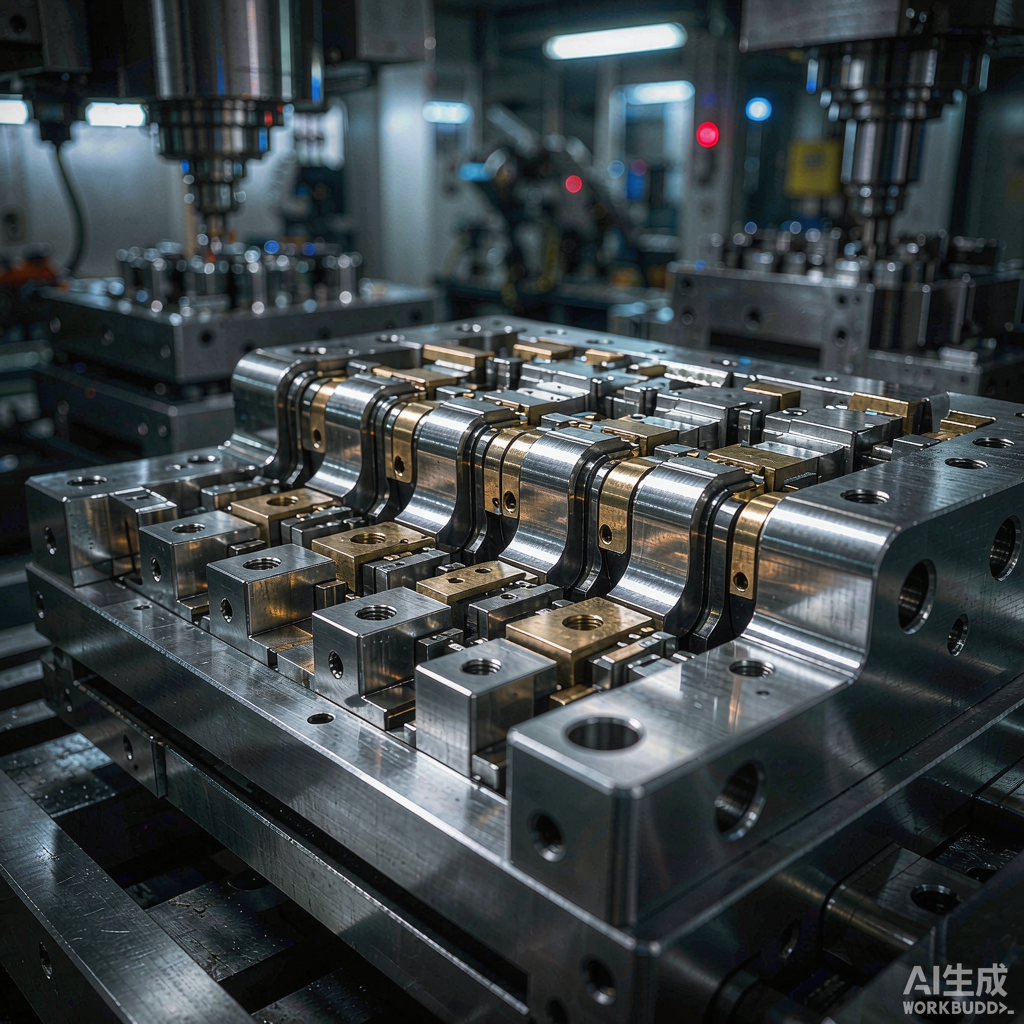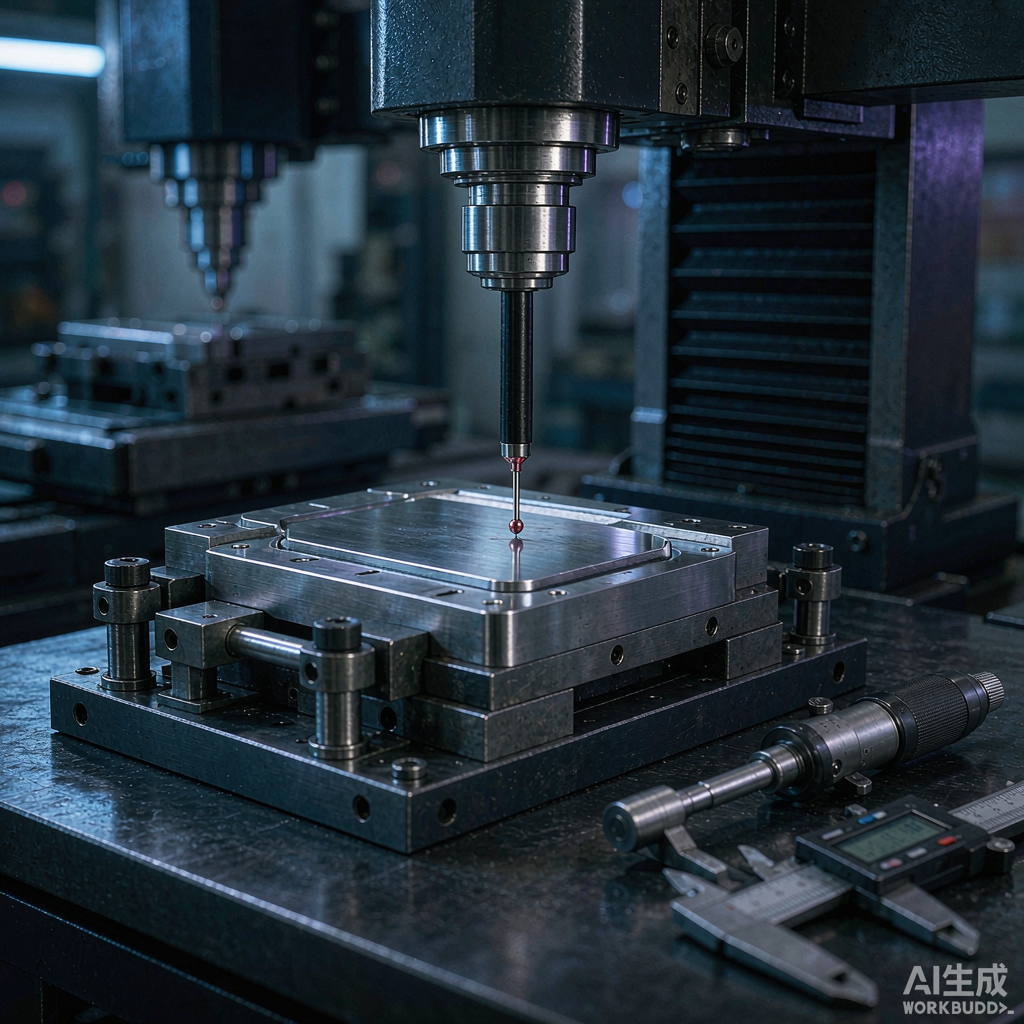
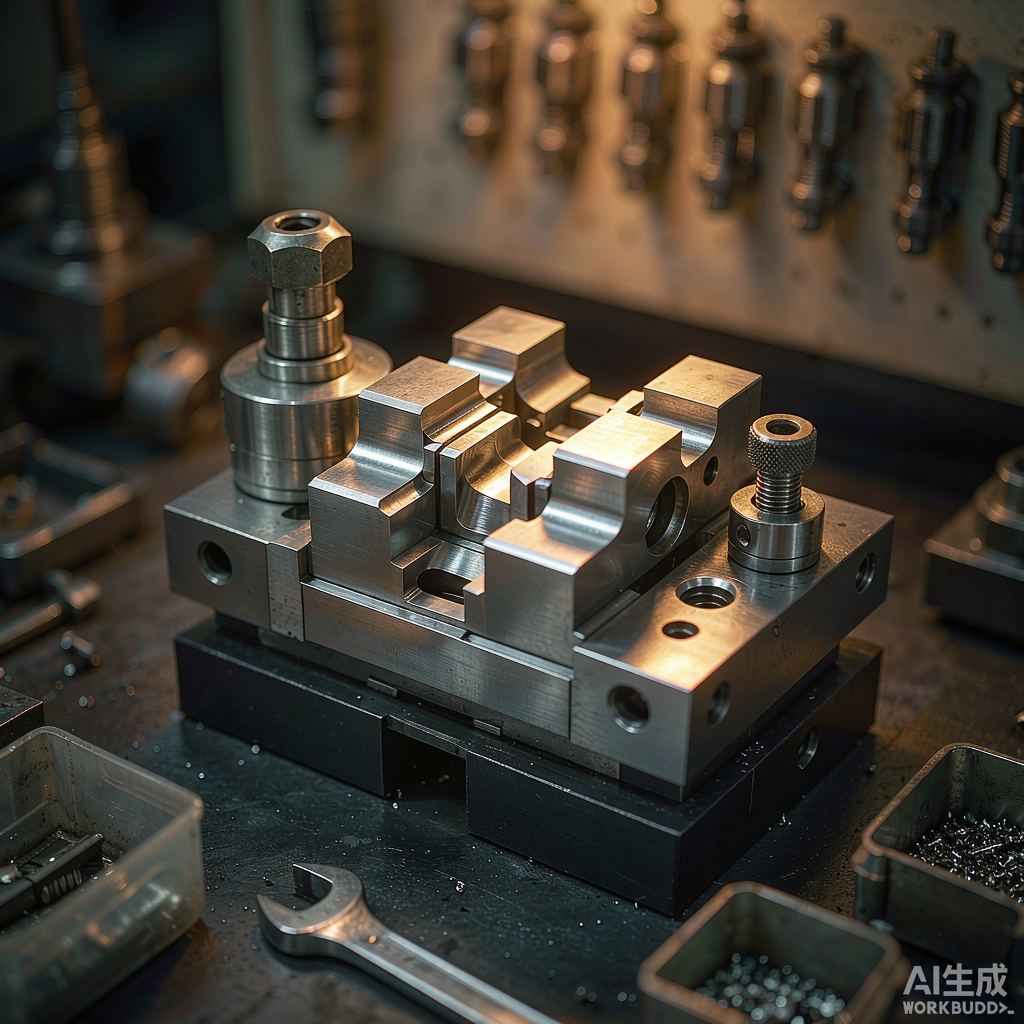
Every mold buyer eventually asks the same question: “The quote said 8 weeks — so why is my mold shipping in week 12?”
If you have sourced precision progressive dies, precision stamping molds, or connector molds from Asia, you already know that the promised lead time and the actual lead time are not always the same number. The gap is rarely caused by a single dramatic failure. More often, it is the accumulation of small, predictable delays that nobody scoped at the RFQ stage.
This article breaks down a realistic delivery timeline for a precision injection or stamping mold, phase by phase, and — more importantly — shows you which parts of that timeline you as the buyer can actually influence. Because roughly 20–30% of typical mold lead time is spent waiting on decisions, approvals, or materials that sit on the buyer’s side of the fence.
The Real Timeline: From PO to Shipment
Below is a phase-by-phase breakdown based on typical projects for automotive connector and precision stamping molds. A “standard” 8-week quote assumes a cooperative buyer, fast design approval, and readily available steel — assumptions that fail more often than vendors like to admit.
| Phase | Typical Duration | What Happens | Common Delay Trigger |
|---|---|---|---|
| 1. DFM & Design Review | 1–2 weeks | Moldability analysis, draft angle check, gate/shrink review, mold structure design | Buyer feedback loops taking more than 3–5 days per round |
| 2. Design Approval | 3–10 days | Buyer engineering team reviews 2D/3D mold design | No single decision-maker named; reviews bounce between buyer’s SQE, R&D, and production |
| 3. Steel Ordering & Preparation | 1–2 weeks | Purchase of mold base, cavity/core steel (e.g., 1.2379, S136, BeCu inserts), heat treatment | Special steels or long beryllium-copper inserts requiring mill lead time |
| 4. Machining (CNC, EDM, Grinding, Wire-Cut) | 2–4 weeks | Roughing, precision machining to ±0.002 mm tolerances, polishing | Design changes after machining has started — the single most expensive delay |
| 5. Assembly & T1 Trial | 3–7 days | Mold fitting, T1 first-shot trial, initial dimension report | Buyer cannot attend or review trial parts within 48 hours |
| 6. Sampling, Correction & Final Approval | 1–3 weeks | T2/T3 trials, dimensional FAI, PPAP-level documentation (for automotive) | Unclear acceptance criteria defined only after T1 |
| 7. Shipping & Logistics | 1–8 weeks | Sea freight (typically 4–6 weeks Asia to EU/US East Coast) or air freight | Switching from air to sea freight adds 4+ weeks — decide this at PO stage, not after T1 |
The pattern is clear: machining — the phase buyers worry most about — is usually the most predictable. Design approval and sampling corrections are where schedules quietly slip.
Where the Time Actually Goes (and Who Controls It)
In our internal review of recent projects, the distribution of a 12-week actual timeline versus an 8-week quoted timeline looked roughly like this:
| Delay Source | Share of Total Delay | Who Owns the Fix |
|---|---|---|
| Slow design approval rounds | ~35% | Buyer |
| Late engineering changes (post-machining) | ~25% | Shared |
| Special material procurement | ~20% | Supplier (flag at RFQ) |
| Trial scheduling & sample logistics | ~10% | Shared |
| Shipping mode changes | ~10% | Buyer |
Notice that more than half of the total delay is buyer-side. That is actually good news — it means most schedule risk is controllable with process discipline, not by paying a premium for a “faster” supplier.
Five Buyer Actions That Genuinely Compress Lead Time
- Name one design decision-maker. Route all DFM and design feedback through a single engineer with authority to approve. Consensus-by-committee adds 1–3 weeks on typical projects.
- Freeze the product design before the RFQ. Every change after cavity steel is cut costs re-machining time and — worse — introduces tolerance risk. If your part is still iterating, quote a soft prototype first.
- Define acceptance criteria in writing at PO stage. Specify CPK requirements, PPAP level (if automotive/IATF 16949 scope), surface finish standards, and the trial shot count. Ambiguity here becomes T2, T3, and a slipped shipment.
- Ask about long-lead materials on day one. Specialty steels, beryllium-free copper alloys, and coated components (PVD surface treatments) can add 2–3 weeks before machining even starts. A serious supplier will flag this in the quote, not after the PO.
- Decide air vs. sea freight at the PO, not after T1. With current sea transit times of 4–6 weeks from Asia to Europe or North America, a late logistics decision alone can wipe out your schedule buffer. Many buyers now order molds 8+ weeks before they are actually needed purely for the shipping window.
What a Realistic Promise Looks Like
When you evaluate a mold supplier’s quote, do not just compare the headline number of weeks. Ask these three questions instead:
- Is the steel lead time included or listed separately?
- How many design approval rounds does the timeline assume?
- What is the committed T1 date, and what is the sampling-to-approval window?
A supplier who answers all three precisely is a supplier who has actually planned your project. One who only says “8 weeks” is quoting hope, not a schedule.
Work With a Supplier Who Plans Timelines, Not Promises Them
At PreciseWorksPlus, we build precision progressive dies and stamping molds (tolerances down to ±0.002 mm) for automotive connector and electronics customers across Europe, the US, and Mexico. Every quote we issue includes a phase-by-phase timeline with steel lead times and sampling windows made explicit — so you know exactly where your mold is, week by week.
Planning a mold project? Send your part drawings or STEP files to rockie.liu@preciseworksplus.com and we will return a detailed timeline breakdown within 48 hours.
Data sources: Phase durations and delay distributions are based on PreciseWorksPlus internal project records for automotive connector and precision stamping molds (2024–2026), cross-referenced with industry-standard injection mold lead time benchmarks published by plastics industry trade associations. Sea freight transit estimates reflect typical 2026 Asia–Europe / Asia–North America container schedules.