Why Die Debugging Fails: The Real Causes Behind 5 Deadly Stamping Die Mistakes
Stamping die debugging is where projects succeed or fall apart. A mold that looks perfect on paper can still produce scrap on the first trial run — and often does. After working with hundreds of progressive die and compound die builds, we’ve identified five mistakes that account for the vast majority of debugging failures. More importantly, we’ll show you exactly how to prevent and fix each one.
Mistake #1: Ignoring Material Spring-Back in Bending Dies
Spring-back is the elastic recovery of sheet metal after bending. It’s predictable — but only if you measure it correctly before cutting steel. Many die shops use generic spring-back compensation tables without accounting for batch-to-batch variation in material properties.
What happens: Parts come out of the die with an angular deviation of 1°–5° from the target. For connector housings or bracket assemblies requiring ±0.5° angular tolerance, even 1° spring-back is a reject.
Root cause: Spring-back depends on yield strength (Rp0.2), Young’s modulus (E), and bend radius-to-thickness ratio (r/t). Steel grades labeled “SPCC” or “SECC” can have yield strength variations of ±20% between coil batches.
Solution:
- Request material certification (mill cert) and verify actual Rp0.2 before die design
- Build bending punch angle with 1°–3° over-bend compensation based on actual material data
- Design adjustable heel blocks to allow fine-tuning on-press without re-machining
- For high-volume runs, use in-die sensors to monitor forming force and detect material shifts
| Material Grade | Typical Yield Strength (MPa) | Spring-Back Angle (r/t=2) | Recommended Over-Bend |
|---|---|---|---|
| SPCC (Cold-rolled mild steel) | 140–180 | 1°–2° | 1.5°–2.5° |
| SECC (Galvanized steel) | 160–200 | 1.5°–2.5° | 2°–3° |
| SUS304 (Stainless steel) | 205–310 | 3°–6° | 4°–7° |
| Al 5052-H32 (Aluminum) | 193–228 | 2°–4° | 3°–5° |
Mistake #2: Incorrect Punch-to-Die Clearance Setup
Blanking and piercing clearance is one of the most debated parameters in stamping. Too tight, and you get galling, chip buildup, and premature wear. Too loose, and you get excessive burr height and dimensional deviation. Yet many shops still rely on a generic “10% of material thickness per side” rule that ignores material type, hardness, and surface condition.
What happens: Burr height exceeds the 0.05 mm customer specification. Punch life drops to 30,000 hits instead of the expected 500,000. Surface fracture zone is uneven.
Solution:
- Use material-specific clearance charts — soft copper requires 4–6% per side; high-strength steel requires 12–15% per side
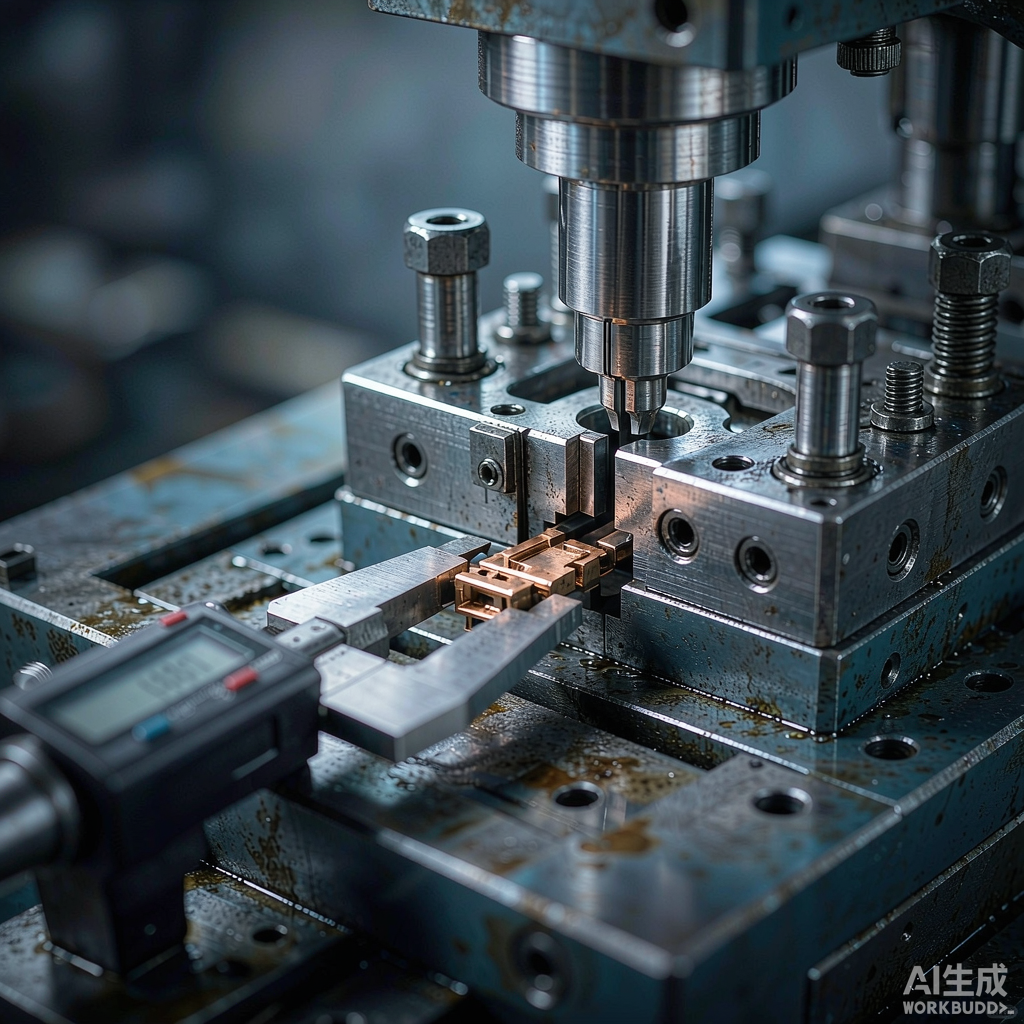
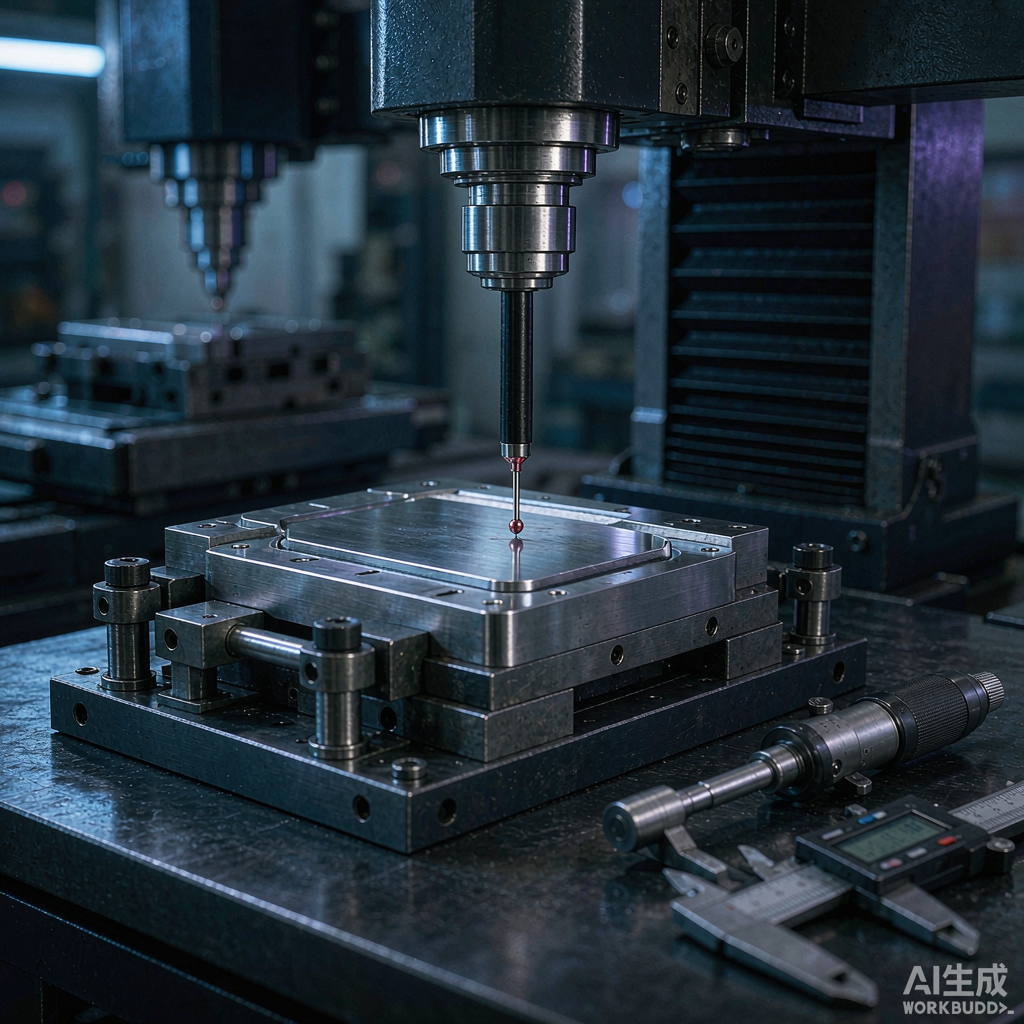
- Always measure punch and die dimensions with a CMM before assembly, not just visually
- For thin materials (t < 0.3 mm), consider electroforming or wire EDM to achieve ±0.002 mm clearance consistency
- Document clearance values in the die drawing — verbal communication leads to re-work
Mistake #3: Mislocated Strip Feed Pitch During Progressive Die Setup
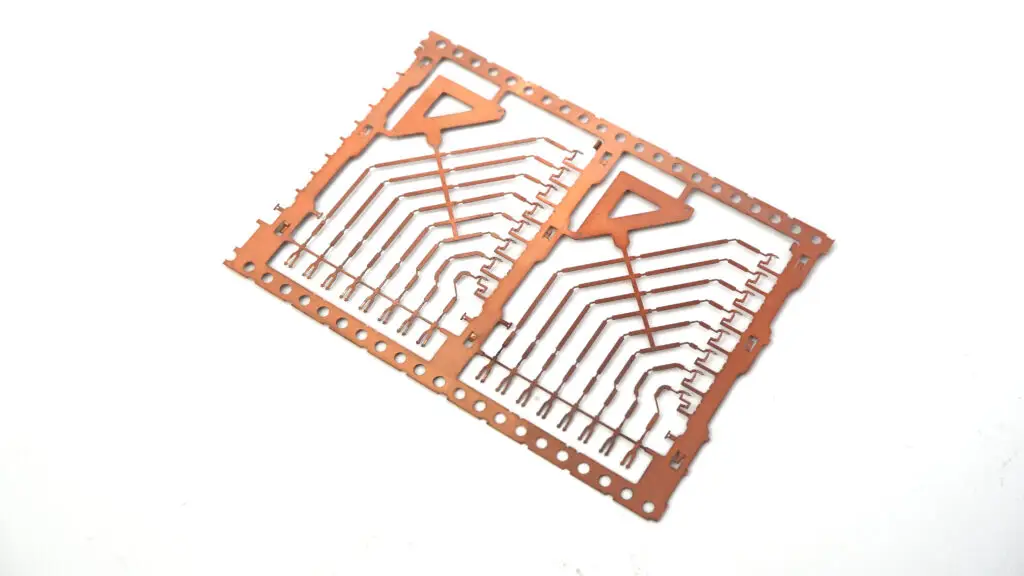
Progressive dies rely on precise strip advancement (pitch) between stations. A pitch error of just 0.05 mm compounds across 8–12 stations, causing a final cumulative position error that can reach 0.3–0.5 mm — well outside typical ±0.1 mm part tolerances.
What happens: Parts pass individual station gauges but fail final assembly checks. The issue is invisible until all stations run simultaneously.
Root cause: Pilot pins not engaging properly due to incorrect pilot hole diameter, worn pilots, or strip camber causing lateral shift between hits.
| Root Cause | Symptom | Corrective Action |
|---|---|---|
| Pilot diameter too small | Strip wanders left/right | Replace pilots; check nominal vs actual hole size |
| Pilot engagement too early | Strip lifts before pilots enter | Adjust pilot entry timing via shim packs |
| Strip camber >1mm/m | Diagonal error at final station | Source flat-cut coil; add lateral guide rolls |
| Feed roll slip | Random short-feeds | Increase feed roll grip; check servo encoder |
Solution: Run a paper strip test before loading actual material. Stamp through all stations with kraft paper, then measure station-to-station positions under a vision system before approving the die setup.
Mistake #4: Overlooking Die Alignment Under Actual Press Conditions
Dies are tested on a precision surface plate in the die shop — but they run in a production press that has its own deflection, parallelism error, and dynamic vibration. A die perfectly aligned on the bench can show 0.02–0.08 mm misalignment under press load.
What happens: Uneven punch wear on one side. Burr appears only on one edge of the part. Progressive cracking in die inserts after 50,000–100,000 hits.
Solution:
- Use precision dial indicators to measure parallelism of the ram and bolster under press load (not just static)
- Run a shut-height check every 50,000 hits in high-volume dies
- For dies requiring <0.01 mm alignment, use self-centering guide post sets with roller cages instead of plain bushings
- Record press ID number on every die drawing — a die approved on Press #3 may not behave the same on Press #7
Mistake #5: Skipping Systematic First Article Inspection (FAI) Before Full Production
This is the mistake that seems obvious — until deadline pressure hits. First Article Inspection validates that the die produces parts conforming to the drawing on the first production run. Skipping it or doing it incompletely costs far more in scrap and rework than the time saved.
What a proper FAI covers:
- All critical dimensions measured with CMM (not just visual check)
- Burr height at all cut edges (measured with profilometer or optical comparator)
- Surface finish on functional areas (Ra value)
- Material certification matching production lot
- Run 300–500 pieces, then re-measure 10% sample to confirm die stability
Shipping the first 50 pieces without FAI is the fastest way to a costly recall. Buyers who receive non-conforming first articles rarely give second chances.
Summary: Debugging Checklist
- ✅ Verify actual material Rp0.2 before starting die design
- ✅ Calculate and verify clearance with CMM — don’t trust nominal dimensions
- ✅ Run paper strip test for progressive dies before using real material
- ✅ Check die alignment under actual press load conditions
- ✅ Complete a proper FAI before releasing to production
Work With a Stamping Die Team That Gets It Right the First Time
At Precise Works+, we specialize in progressive dies, compound dies, and precision stamping tooling for automotive connectors, electronics, and industrial hardware. Our engineering team performs systematic die trials with full CMM validation on every build.
If you’re dealing with stamping die debugging failures or need a reliable mold supplier for your next project, reach out directly:
📧 rockie.liu@preciseworksplus.com
Data references: ASM Handbook Vol. 14B (Metalworking: Sheet Forming); Tooling & Production Magazine; IODD Progressive Die Design Standards; supplier field data from Precise Works+ production records.