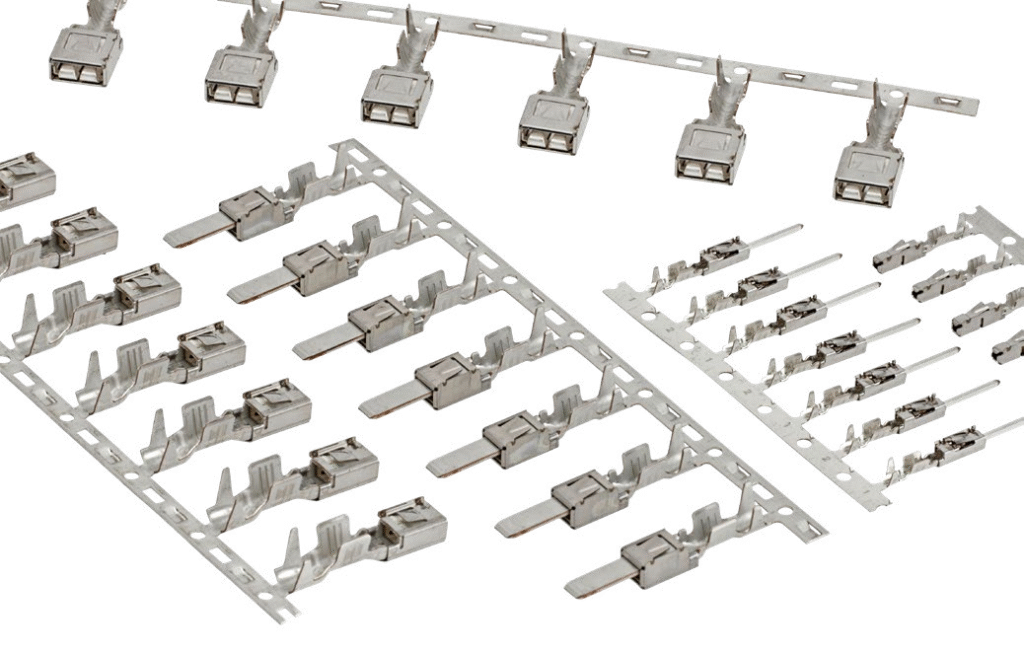

The global copper market has witnessed an unprecedented rally in recent months, with LME copper prices breaking through $11,700 per ton and Shanghai copper futures exceeding RMB 93,000 per ton. For stamping companies that rely heavily on copper and copper alloys as core raw materials, this sharp price surge has brought significant cost pressure—eroding profit margins, disrupting production plans, and creating uncertainty in supply chains. However, challenges also present opportunities for deeper collaboration. Instead of viewing the price hike as a unilateral burden, stamping companies and their customers can join hands to build a more resilient, transparent, and mutually beneficial partnership. Here’s how we can navigate this storm together:
1. Open and Transparent Cost Communication: Lay the Foundation for Trust
The first step in collaborative problem-solving is eliminating information asymmetry. Stamping companies should proactively engage customers with clear, data-driven communication about how copper prices impact product costs:
- Share cost breakdowns: Provide transparent insights into how copper prices account for 30%-60% of total production costs (varies by product type). For example, a 20% increase in copper prices can raise the total cost of a copper connector stamping part by 12%-15%. Use visual tools like cost structure charts to help customers understand the direct link between raw material fluctuations and pricing.
- Update price adjustment mechanisms: Collaboratively establish a flexible pricing formula tied to public copper indices (e.g., LME 3-month copper futures, Shanghai Futures Exchange copper benchmarks). Agree on reasonable price adjustment thresholds (e.g., a ±5% copper price swing triggers a review) and notice periods to avoid sudden price shocks. This predictable framework replaces “ad-hoc price hikes” with mutual accountability.
- Forecast market trends: Share industry research and forecasts (e.g., from the International Energy Agency, CSPT) to align expectations. For instance, inform customers about long-term structural shortages driven by renewable energy and AI demand, as well as short-term supply disruptions from mine accidents. This helps customers plan budgets and production schedules proactively.
2. Co-Design for Material Efficiency: Reduce Copper Consumption Without Sacrificing Quality
Material optimization is a win-win strategy—lowering costs for stamping companies while maintaining or improving product performance for customers. Collaborate closely on design and process tweaks to maximize copper efficiency:
- Material substitution with functional equivalence: Work with customers’ R&D teams to identify viable alternatives to pure copper. For non-critical conductive components, copper-clad aluminum (cost 20%-30% lower than pure copper) or copper-nickel-silicon alloys (30% stronger, enabling thinner gauges) can deliver the same performance. For structural parts, high-strength steel or 6-series aluminum (1/3 the cost of copper) may be suitable if conductivity/thermal requirements are not paramount. Case in point: A leading automotive stamping company collaborated with an EV manufacturer to switch from pure copper to copper-aluminum composite for battery busbars, cutting material costs by 18% without compromising safety.
- Optimize product design for stamping efficiency: Redesign parts to minimize copper waste. For example, simplify complex shapes to enable tighter nesting of blanks (using CAD/CAE nesting software), which can boost material utilization from 60% to 75% or higher. Reduce unnecessary thickness in non-load-bearing areas—e.g., thinning a copper heat sink by 0.2mm (where engineering specs allow) can cut copper usage by 10%.
- Adopt lean stamping processes: Jointly invest in process upgrades that reduce waste. For instance, servo stamping machines (vs. traditional hydraulic presses) lower scrap rates by 10% and improve precision, while laser welding of copper sheets allows for targeted use of high-purity copper only in critical areas. Customers benefit from more consistent quality, while stamping companies reduce material waste and cost.
3. Long-Term Procurement and Inventory Collaboration: Stabilize Supply Chains
Volatile copper prices are most disruptive when both parties operate with short-term, reactive procurement strategies. Collaborate to build a more stable supply chain through coordinated purchasing and inventory management:
- Joint long-term supply agreements (LTSAs): Partner with customers to secure copper supplies through multi-year LTSAs with trusted suppliers (e.g., major smelters, recycled copper producers). By combining order volumes, stamping companies can negotiate better pricing and priority supply, while customers gain certainty of supply. For example, a stamping company and its electronics customer jointly signed a 2-year LTSA covering 70% of their copper needs, locking in a price 8%-10% below spot market fluctuations.
- Optimize inventory management: Implement vendor-managed inventory (VMI) or just-in-time (JIT) delivery models to reduce holding costs and inventory risks. For high-volume, stable-demand parts, customers can share production forecasts 3-6 months in advance, allowing stamping companies to purchase copper in bulk during price dips. Avoid overstocking, but maintain a safety stock buffer for critical components to mitigate supply disruptions.
- Embrace recycled copper: Collaborate to qualify recycled copper as a raw material. Recycled copper costs 15%-20% less than primary copper and has a lower carbon footprint—aligning with sustainability goals. Work with third-party labs to verify that recycled copper meets quality standards (e.g., purity ≥99.99% for conductive parts) and ensure consistent performance.
4. Jointly Explore High-Value Solutions: Shift from “Cost-Cutting” to “Value-Creation”
Instead of focusing solely on reducing costs, collaborate to create higher-value products that can absorb copper price increases while delivering more value to end-users:
- Focus on high-precision, high-margin applications: For customers in growing sectors like renewable energy (solar inverters, wind turbines) and AI data centers, co-develop specialized copper stamping parts (e.g., high-precision copper foils for batteries, thermal management components for servers). These applications have higher technical barriers and lower price sensitivity, allowing for reasonable cost pass-through while positioning both parties for long-term growth.
- Integrate additional services: Stamping companies can add value by offering post-stamping services (e.g., surface treatment, assembly, quality testing) that reduce customers’ total cost of ownership. For example, a stamping company that provides pre-assembled copper connector kits (instead of just stamped parts) helps customers save on labor and logistics costs, offsetting higher material prices.
- Prioritize sustainability: Leverage the shift to low-carbon economies by co-developing eco-friendly solutions. For instance, use recycled copper to reduce carbon emissions (recycled copper emits 95% less CO2 than primary copper production) and market the product as “sustainable” to end-users. This not only reduces costs but also enhances brand value for both stamping companies and customers.
5. Build a Strategic Partnership: Beyond Transactions to Long-Term Resilience
The copper price surge is not a temporary blip—it reflects long-term trends like the energy transition (EVs, renewable energy require 2-5x more copper than traditional technologies) and supply constraints (new copper mines take 6-10 years to develop). To navigate these trends, stamping companies and customers should evolve from transactional relationships to strategic partnerships:
- Collaborate on R&D: Invest in joint research to develop next-generation materials and processes (e.g., copper-based composites, additive manufacturing for complex stamping tools). For example, partnering with universities or research institutes to improve copper recycling efficiency or develop ultra-thin, high-strength copper alloys can create a competitive edge for both parties.
- Share risk through financial tools: For large-scale projects, explore collaborative hedging strategies. Stamping companies can use copper futures or options to lock in raw material prices, with customers sharing a portion of the hedging cost (e.g., 50/50 split) in exchange for price stability. This shared risk-reward model aligns incentives and reduces exposure to market volatility.
- Align on long-term goals: Discuss customers’ growth plans (e.g., expanding into EVs, increasing production capacity) and stamping companies’ capacity investments (e.g., adding servo stamping lines, expanding recycled copper processing). By aligning on strategic priorities, both parties can make informed decisions that support mutual growth—even amid commodity price fluctuations.
Conclusion: Collaboration Turns Pressure Into Opportunity
The current copper price surge is a test of resilience for the stamping industry and its customers. But it also offers a chance to strengthen partnerships, drive innovation, and build a more sustainable and efficient supply chain. By communicating transparently, optimizing materials and processes, collaborating on procurement and inventory, creating value together, and building strategic long-term relationships, stamping companies and customers can turn cost pressure into a competitive advantage.
En Trabajos precisos Plus, we believe that our success is intertwined with yours. We are committed to working hand-in-hand with you to navigate this challenging market, deliver high-quality products at fair prices, and build a partnership that thrives—no matter what the copper market brings. Let’s turn this storm into an opportunity to grow stronger together.
Have questions or want to explore collaborative solutions? Reach out to our team today—we’re here to listen, innovate, and succeed with you.