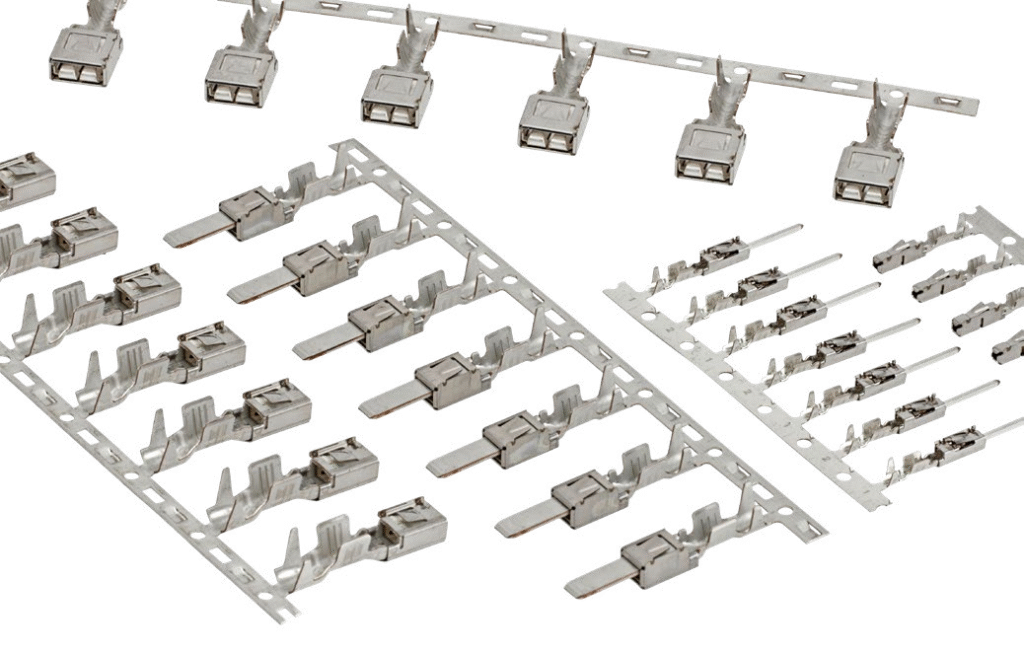
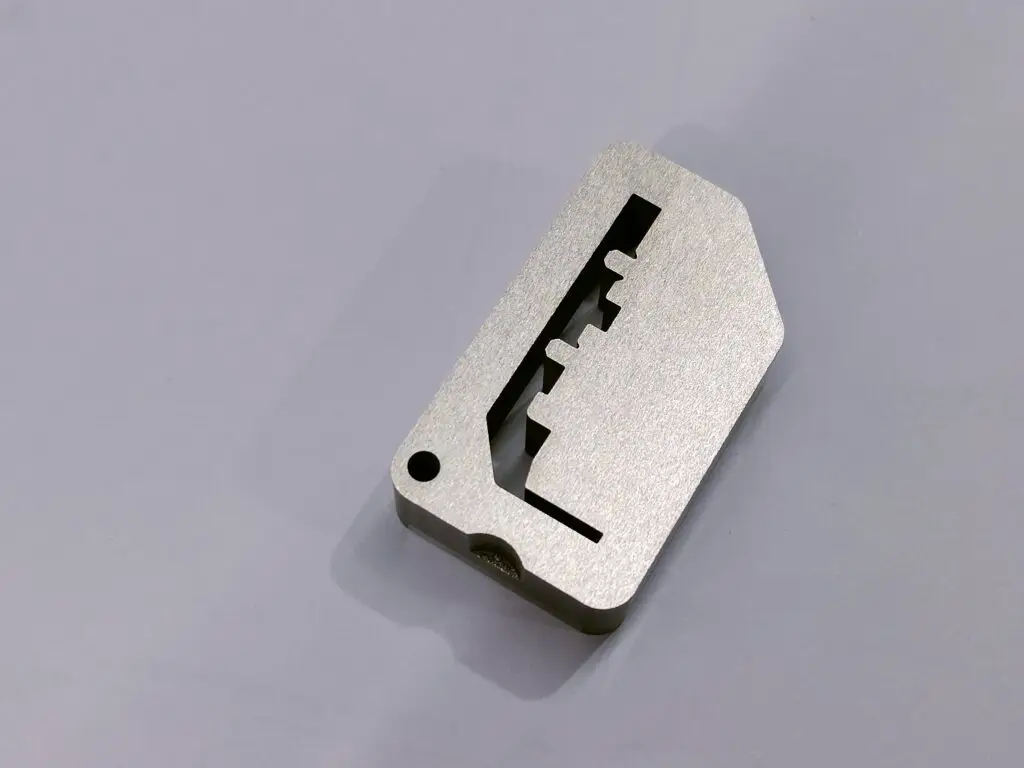
The premier choice for precision stamping molds is tungsten steel (carbide). This material, composed of tungsten carbide and a metallic binder like cobalt, combines high hardness, exceptional wear resistance, high compressive strength, and good rigidity. Its service life is typically tens to hundreds of times longer than that of traditional steel molds.
In modern manufacturing, especially in fields with extreme demands for precision and longevity—such as connectors, lead frames, precision springs, and semiconductor packaging—selecting the correct tungsten steel brand directly determines the performance ceiling of the mold and the stability of production.
01 Why Tungsten Steel?
The performance of a mold directly dictates product precision, production efficiency, and cost. Tungsten steel has become the “indispensable heart” of high-end precision molds due to its unparalleled material properties.
Tungsten steel, technically known as cemented carbide, is primarily made from hard tungsten carbide particles and a metal binder like cobalt or nickel, manufactured through powder metallurgy. This unique structure gives it a hardness typically above HRA 90, far exceeding any tool steel. This extreme hardness provides exceptional wear resistance, capable of withstanding millions or even tens of millions of stamping cycles.
Material stability is key. Tungsten steel has a low coefficient of thermal expansion, maintaining high dimensional stability under severe temperature fluctuations, which is crucial for precision forming. Furthermore, by adjusting the tungsten carbide grain size and cobalt content, engineers can customize the material’s toughness-to-hardness ratio across a wide range to suit various needs, from micro-electronic component blanking to high-strength bolt forming. It is these characteristics that make tungsten steel molds the cornerstone of modern high-end manufacturing, with their performance directly impacting final product quality and production costs.
02 The Global Brand Landscape
The global carbide market is not monopolized by a single giant but presents a multi-tiered, specialized competitive landscape. Industry research reports indicate that major global players include comprehensive giants, specialized mold material suppliers, and niche manufacturers. Understanding this brand map is the first step toward making an informed choice.
Brand Tier Representative Brands Core Characteristics & Market Positioning Global Comprehensive Giants Sandvik, Kennametal, Sumitomo Electric Most complete product lines, deep technical heritage, provide full-range services from materials to solutions, setting industry technical trends. European Specialists CERATIZIT Profound expertise in specific fields (e.g., metal cutting, wear-resistant parts), excellent product performance, strong customization capability. Japanese Precision Experts MITSUBISHI MATERIALS, Everloy, Sanalloy, Nippon Tokushu Goukin Renowned for extreme stability, fine classification, and superior wear resistance, dominating fields like electronics and semiconductor ultra-precision stamping. Korean & Others Iljin Diamond Strong competitiveness and market share in specific categories (e.g., drawing dies, precision rods). This table reveals a clear logic: there is no “best” brand, only the “most suitable” one. The choice depends on the specific operating conditions of the mold, performance priorities, and budget considerations.
03 Deep Dive into the Giants: Three International Brands
Among the many brands, several are unavoidable benchmarks. They define industry standards and represent different technical philosophies.
Sandvik is undoubtedly the “empire” in the carbide field. Its core competitiveness lies in the extreme control of material homogeneity. Fine management throughout the entire process, from powder preparation to sintering, ensures minimal performance variation between batches. For continuous high-speed stamping molds requiring long life and high stability (e.g., IC lead frame molds), this consistency is fundamental to reliability. Its classic mold material grades (such as the H10 series) are famous for their excellent balance of wear resistance and toughness.
Kennametal is more like a “comprehensive technical expert.” Beyond offering a wide range of general and special grades, Kennametal’s strength lies in its in-depth application engineering support. They not only supply materials but also provide systematic solutions—from material selection to mold design optimization—for problems like adhesive wear when stamping stainless steel or insufficient toughness in cold forging.
Sumitomo Electric represents Japanese precision materials. Its products exemplify refinement and scenario-specific application. For different workpiece materials (like silicon steel sheets, phosphor bronze, stainless steel) and different wear mechanisms (abrasive wear, adhesive wear), Sumitomo offers specially optimized grades. Its mature application of HIP (Hot Isostatic Pressing) technology effectively eliminates internal micro-voids in the material, enhancing toughness and resistance to chipping, making it particularly suitable for precision molds with delicate punches.
04 The Hidden Experts: Notable Specialized & Niche Brands
Beyond the giants, a group of brands known for their “specialized expertise” hold dominant positions in specific fields. They are the “secret weapons” for solving particular challenges.
CERATIZIT, formed from the merger of two European carbide giants, is a formidable force. It has unique expertise in wear-resistant technology; some of its grades demonstrate longer life when blanking highly abrasive materials like composites or pre-coated sheets. It also has strong supply capabilities for large, heavy-duty mold carbides.
Japan’s Everloy and Sanalloy are “treasure brands” for precision mold engineers. Their product catalogs resemble encyclopedias of mold operating conditions. For instance, Everloy’s “KD20” is a classic choice for precision electronic stamping, while its “KX01” grade features a special surface treatment for stainless steel’s tendency to gall. Sanalloy clearly categorizes its products by dimensions like “wear-resistant,” “impact-resistant,” and “corrosion-resistant,” allowing engineers to quickly find candidate materials as if consulting a dictionary.
Iljin Diamond is a global leader in the field of drawing dies. Although drawing dies differ in form from stamping dies, Iljin possesses top-tier technology in manufacturing ultra-fine grain, ultra-high hardness carbides. This technology also extends to its precision rods and high-end stamping mold materials, giving it a place in precision forming applications requiring extremely high surface finish and wear resistance.
05 Core Logic: Matching the “Perfect Partner” for Your Mold
Faced with numerous choices, a clear, step-by-step decision-making framework is more important than simply comparing brands.
The first step is to accurately define requirements. Ask three questions: What material does the mold primarily process (copper alloy, stainless steel, silicon steel sheets)? What is the core failure mode (edge wear, chipping, adhesion)? What are the production volume and lifespan targets? The answers are the lighthouse guiding your brand direction.
The second step is to translate needs into material performance language. Processing silicon steel sheets primarily requires high wear resistance; processing stainless steel requires attention to anti-galling properties besides wear resistance; for precision molds with fine punches, the material’s toughness (chipping resistance) is critically important. Different brands and grades emphasize these performance indicators differently.
The third step is to match the brand’s technical strengths. For pursuing ultimate stability and comprehensive support, giants like Sandvik and Kennametal are the primary choice. If the challenge lies in ultra-precision, high-wear-resistance electronic stamping, Japanese experts like Everloy and Mitsubishi Materials are more precise choices. If you need to solve special galling or chipping problems, you should examine the dedicated grades from specialists like CERATIZIT or Japanese niche brands in detail.
The final, essential step is: small-batch trial mold verification. No matter how impressive the data, practical testing is the only standard. Conduct stamping tests for at least 5,000-10,000 cycles, focusing on the initial wear curve, chipping, and dimensional stability.
Walking down the aisle of a mold shop, the heavy impact sound of traditional steel molds is absent, replaced by the high-speed, crisp, and stable stamping rhythm of tungsten steel molds.
Every mold equipped with top international brand tungsten steel produces the precise components that build the contemporary world, maintaining accuracy far beyond its designed lifespan.
As the mold’s “heart” beats strongly, the boundaries of materials science continue to expand.
We are a Chinese leading company in the manufacture of tooling, stamping, injection molding, CNC machined parts. If you wish to learn more about this subject, please do not hesitate to contact us.