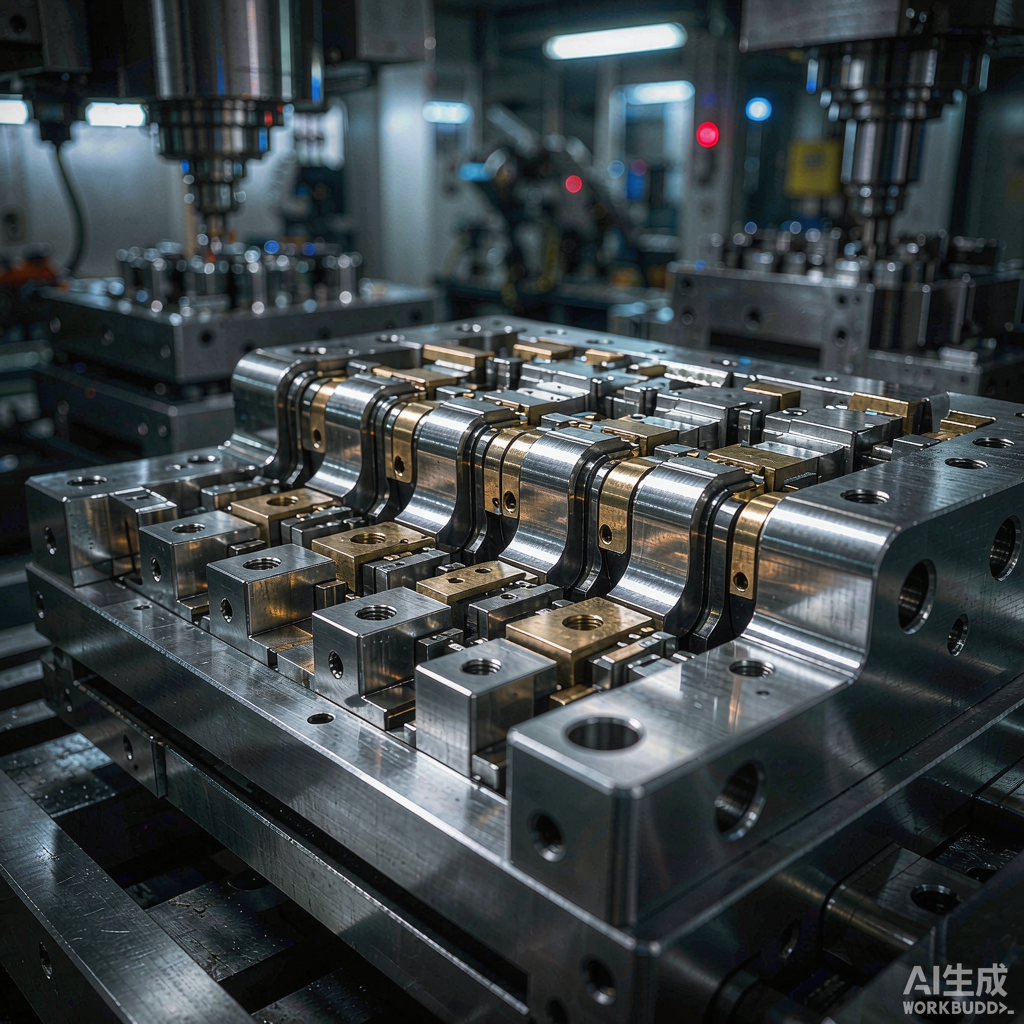
Choosing Asian Mold Suppliers in 2027: A Practical Due-Diligence Framework for U.S. and European Buyers
Global supply chain restructuring has pushed thousands of U.S. and European buyers back into the market for Asian tooling. Some are diversifying away from a single country; others are entering Asia for the first time. Either way, the biggest risk is no longer where to buy — it is how to evaluate a mold supplier you may never visit. This article lays out a practical due-diligence framework used by experienced sourcing teams, covering capability, quality systems, communication, IP protection, and total landed cost.
Why Supplier Selection Matters More Than Price Negotiation
A precision progressive die or injection mold is not a commodity purchase. It is a multi-year engineering asset whose quality determines your scrap rate, maintenance budget, and delivery performance for the life of the program. Industry experience consistently shows that tooling problems found late — at T1 or during production ramp-up — cost 10 to 50 times more to fix than issues caught during supplier evaluation. In other words, the cheapest quote is often the most expensive decision on the table.
A structured due-diligence process protects you in three ways: it filters out shops that overstate capability, it surfaces hidden cost drivers before the PO, and it builds the technical foundation (design standards, mold specs, acceptance criteria) that makes remote collaboration workable.
The Five-Pillar Due-Diligence Framework
Use these five pillars to score any Asian mold supplier before committing tooling dollars. Each pillar can be evaluated remotely through documents, video audits, and sample parts.
| Pillar | What to Verify | Red Flags |
|---|---|---|
| 1. Engineering Capability | Design software (UG/NX, AutoCAD, Moldflow), in-house design team vs. outsourced, experience with your part family (connectors, lead frames, precision stamping), tolerance capability records | Design work subcontracted with no named engineer; no tolerance data beyond marketing claims; unwilling to share sample mold designs (watermarked) |
| 2. Manufacturing Assets | Equipment list (wire EDM, CNC machining centers, grinding), key machine age and brands (Agie, Sodick, Makino, Mitsui), measuring equipment (CMM, optical, profilometer) | Equipment photos that cannot be verified live; no in-house heat treatment or coating (fully outsourced without partner disclosure) |
| 3. Quality System | ISO 9001 / IATF 16949 certification scope, PPAP capability, mold acceptance standards (SPI or custom), trial reporting (T0/T1/T2 reports with measurement data) | Certificate held by a different legal entity; no PPAP experience; “we guarantee quality” with no documented acceptance criteria |
| 4. Communication & Project Management | Named English-speaking project engineer, defined milestone reporting cadence, responsive RFQ turnaround (technical questions answered within 48h), time-zone overlap commitment | Sales-only contact with no engineer access; RFQ answers that ignore technical questions; no milestone plan offered |
| 5. Commercial & IP Protection | NDA and mold-ownership clause in contract, payment terms tied to milestones (not large upfront), spare-parts and maintenance support commitment, export experience and Incoterms fluency | Contract silent on mold ownership; 50%+ upfront payment demanded; no reference export customers in your region |
Remote Audits: What to Ask For and How to Read It
Travel budgets no longer stretch to visiting three candidate suppliers per project, so the remote audit has become the core evaluation tool. A credible supplier will offer — without being asked twice:
- A live video walk-through of the shop floor, not a produced marketing video. Ask the host to walk to a specific machine and show the control panel date.
- Watermarked sample design files and mold drawings, which reveal far more about engineering depth than any brochure.
- Redacted trial reports (T1/T2) from programs similar to yours, showing measurement tables and correction loops.
- Customer references you can actually contact, ideally in your own time zone and industry.
- A written mold specification (steel grades, guide systems, ejection, cooling design standards) so both sides share acceptance criteria from day one.
If a supplier resists all five requests, that resistance is the audit result.
Comparing Regions: A Balanced View for 2027 Sourcing
Buyers often frame the decision as “China vs. elsewhere,” but the more useful comparison is between sourcing models. The table below summarizes typical trade-offs seen across current programs:
| Sourcing Model | Typical Tooling Cost Index | Lead Time (Mold Build) | Best Suited For |
|---|---|---|---|
| Single-source, one region (incumbent) | 100 (baseline) | 6–12 weeks | Stable programs with proven supplier relationships |
| China primary + regional backup (dual-region) | 105–115 | 8–14 weeks | High-volume connector and stamping programs needing risk coverage |
| Full nearshoring (Mexico / Eastern Europe tooling) | 120–150 | 10–16 weeks | Programs where JIT supply or tariff exposure dominates tooling cost |
The dual-region model — typically a Chinese toolmaker for precision and cost, paired with a regional maintenance or duplicate-mold partner — has become the default answer for automotive connector programs, because it captures Asian tooling economics while protecting against freight disruption and tariff shifts. The key is to select the Asian partner with the strictest criteria, since both regions inherit the quality of the first mold.
A 30-Day Action Plan
- Week 1: Build your supplier scorecard from the five pillars above; weight them for your program (e.g., precision stamping weights engineering capability higher).
- Week 2: Issue RFQs to 4–5 shortlisted suppliers with a complete technical package; score response quality, not just price.
- Week 3: Run remote audits with the top 2–3 candidates; check references.
- Week 4: Finalize mold specification and contract (ownership, milestones, acceptance criteria); award to one supplier with a documented second source.
Data Sources
Lead time and cost ranges in this article reflect aggregated experience from automotive connector and precision stamping tooling programs across Asian, Mexican, and European suppliers between 2024 and 2026, including publicly reported tariff and freight trends. Figures are indicative for planning purposes; actual results vary by part complexity, steel selection, and region.
Work With a Partner Who Passes Every Pillar
Dongguan Shuangshun (PreciseWorksPlus) manufactures precision progressive dies, fine-blanking tools, lead-frame molds, and long beryllium-free copper inserts with tolerances down to ±0.002 mm — and we welcome the full due-diligence process described above: live video audits, watermarked designs, redacted trial reports, and reference calls with customers in the U.S. and Europe.
Contact us for a no-obligation technical review of your next tooling project:
Email: rockie.liu@preciseworksplus.com