From RFQ to Shipment: The Complete Delivery Timeline of a Precision Mold
When sourcing precision molds from Asia, one of the most common frustrations buyers face is unpredictability — unexpected delays, unclear milestones, and vague lead time estimates. Understanding exactly what happens between your initial request for quotation (RFQ) and the moment your mold arrives at your facility is the first step toward a smoother, more reliable procurement process.
In this article, we break down the complete delivery timeline for a typical precision injection mold or stamping die, from the very first inquiry through final shipment. Whether you’re a procurement manager placing your first order or an experienced engineer looking to tighten schedules, this guide is for you.
1. RFQ & DFM Review (Days 1–5)
The process begins when you submit your RFQ along with 2D drawings or 3D CAD files. A competent mold supplier will not simply quote a price — they will conduct a Design for Manufacturability (DFM) review to identify potential issues before tooling begins.
During this phase, the engineering team evaluates:
- Wall thickness uniformity and draft angles
- Undercuts and complex geometries that may require side actions or lifters
- Gate location and parting line feasibility
- Material selection and its impact on shrinkage
- Tolerance stack-up for assembly-critical features
A thorough DFM review at this stage can prevent costly rework later. Expect 2–5 business days for a standard mold; complex multi-cavity tools may take longer.
Pro Tip: Always request a written DFM report before approving a quote. If a supplier skips this step, it’s a red flag.
2. Quotation & PO Confirmation (Days 5–10)
After DFM review, the supplier issues a formal quotation covering mold price, T1 sample date, payment terms, and warranty conditions. Once you accept and issue a Purchase Order (PO), the mold is scheduled into production.
Key items to confirm at this stage:
- Mold steel grade (e.g., P20, H13, S136) and hardness
- Cavity count and expected mold life (shots)
- Hot runner system specification (brand, nozzle count)
- Sample quantity and acceptance criteria
- Payment milestones: typically 50% deposit, 40% on T1 approval, 10% on final shipment
Most suppliers require a deposit (30–50%) before scheduling production. This is standard practice — not a warning sign.
3. Mold Design & Engineering (Days 10–20)
With the PO confirmed and deposit received, the engineering team begins detailed mold design using CAD/CAM software (CATIA, UG NX, or SolidWorks). This includes:
- Core and cavity layout
- Cooling channel design for cycle time optimization
- Ejector pin placement
- Slider and lifter mechanisms
- Mold flow analysis (optional but recommended for complex parts)
Design approval is a critical gate. Buyers should review and approve the mold design drawing (often called a “mold layout” or “tool design”) before machining begins. Changes after machining starts are expensive.
4. Material Procurement & Rough Machining (Days 18–30)
Once the design is approved, mold steel is ordered or pulled from stock. High-grade steels like H13 or S136 may require 5–10 extra days if not in inventory.
Rough machining involves:
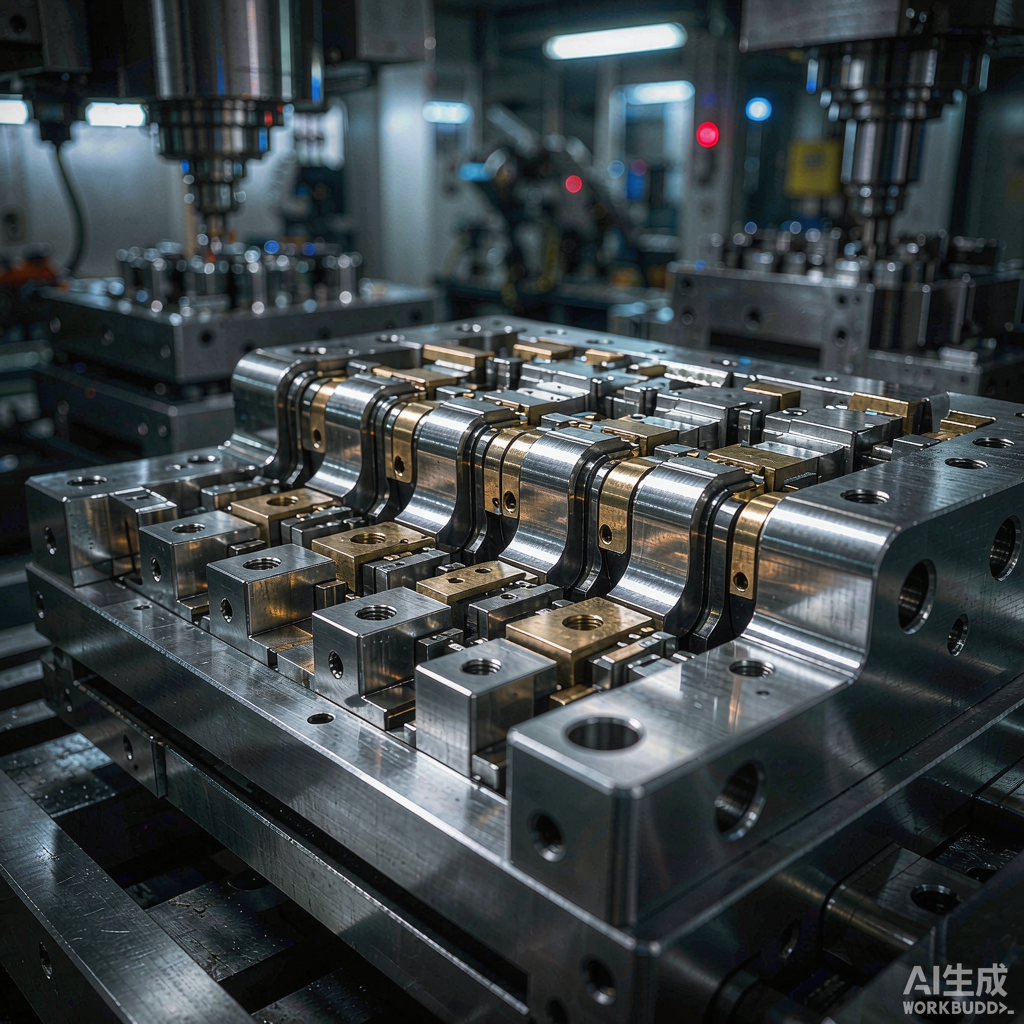
- CNC milling of the mold base and inserts
- EDM (Electrical Discharge Machining) for complex features
- Wire cutting for precise contours
This phase is the most time-consuming portion of the timeline for complex molds.
5. Fine Machining, Polishing & Assembly (Days 30–45)
After rough cutting, the mold enters fine finishing. Surface quality at this stage directly determines part appearance and release behavior. For optical-grade or Class A surface parts, mirror polishing (Ra 0.1 µm or better) adds 3–7 extra days.
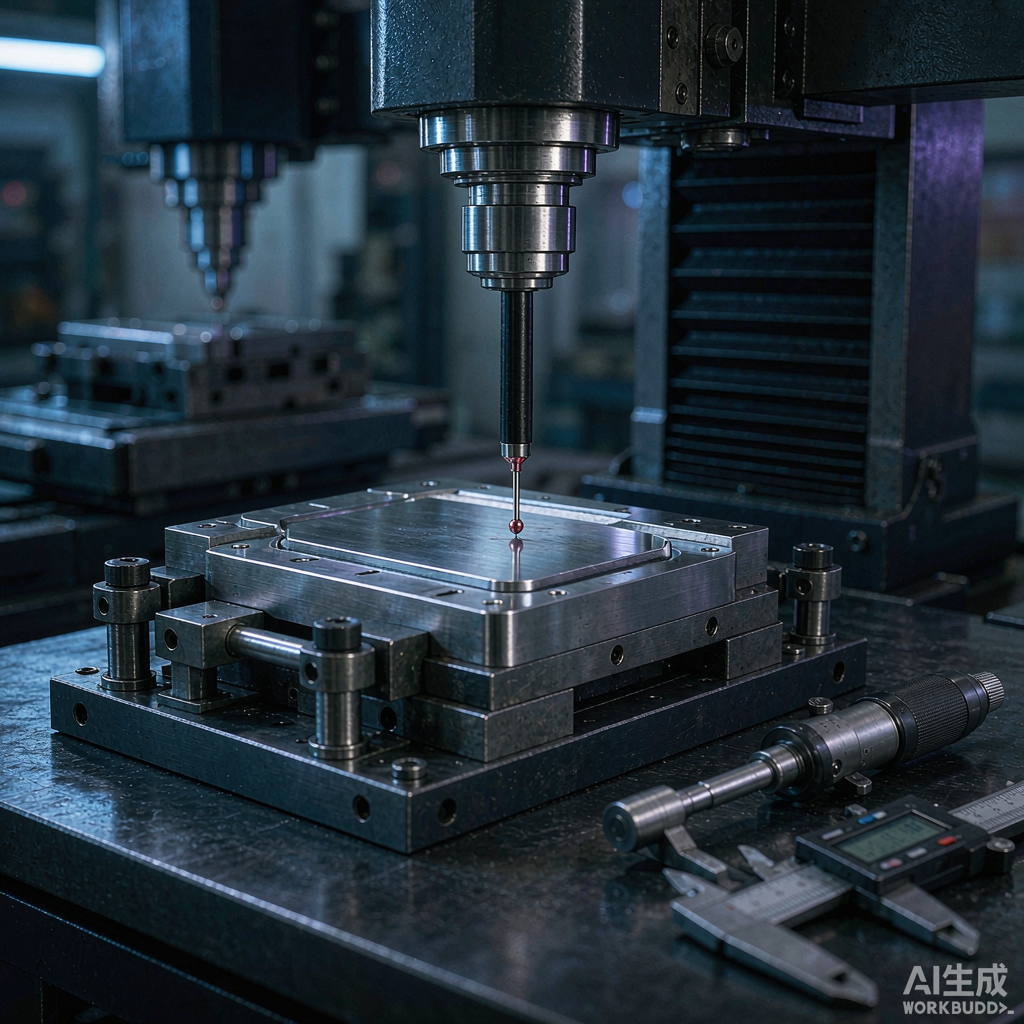
Assembly involves fitting all components — cores, cavities, sliders, ejectors, and the hot runner system — and verifying dimensional accuracy with CMM inspection.
6. Mold Trial (T1 Sample) & Revision (Days 45–60)
The first mold trial (T1) produces initial samples for dimensional and functional inspection. It is rare for a complex mold to pass T1 without any adjustments. Typical revisions include:
- Steel addition or removal to hit tight tolerances
- Venting improvements to eliminate burn marks or short shots
- Gate resizing for better fill balance
- Cooling optimization to reduce warpage
Most molds require 1–2 trial rounds (T1, T2). Each round adds 5–10 business days including shipping samples to the buyer for approval.
7. Final Acceptance & Shipment (Days 60–75)
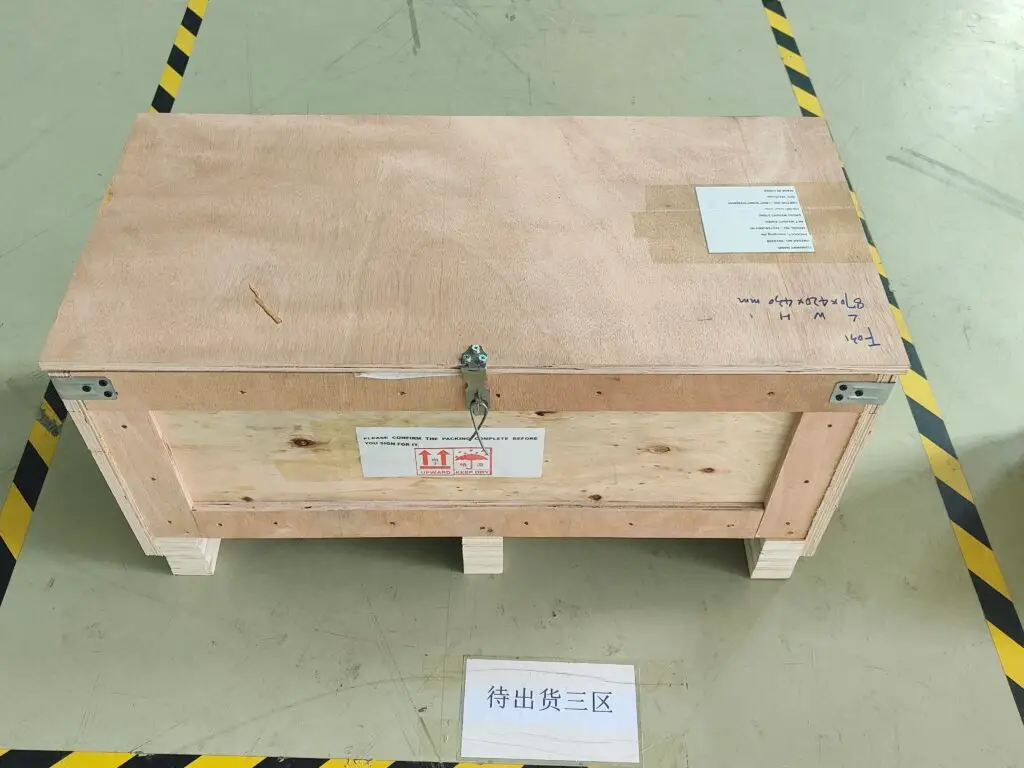
Once samples are approved and remaining balance is paid, the mold is prepared for export. This involves:
- Anti-rust treatment and protective packaging
- Export documentation: commercial invoice, packing list, CO (Certificate of Origin)
- Booking freight (sea or air) and customs clearance
Sea freight from China or Southeast Asia to North America or Europe typically takes 20–35 days. Air freight (3–5 days) is available for urgent cases at 4–6× the cost.
Typical Timeline Summary
| Phase | Duration (Business Days) | Key Deliverable |
|---|---|---|
| RFQ & DFM Review | 1–5 | DFM report + quotation |
| Quotation & PO Confirmation | 5–10 | Signed PO, deposit payment |
| Mold Design | 10–20 | Approved mold layout drawing |
| Material Procurement & Rough Machining | 18–30 | Rough-machined mold components |
| Fine Machining, Polishing & Assembly | 30–45 | Assembled mold, CMM report |
| T1 Trial & Revision | 45–60 | Sample approval |
| Final Acceptance & Shipment | 60–75 | Mold shipped, tracking number |
Note: Timeline assumes a single-cavity injection mold of moderate complexity. Multi-cavity tools, tight tolerances, or specialized materials may extend the timeline by 20–40%.
Factors That Cause Delays (And How to Avoid Them)
| Delay Factor | Root Cause | Mitigation |
|---|---|---|
| Late design approval | Buyer-side review bottlenecks | Set internal SLAs; assign a dedicated reviewer |
| Frequent ECOs (Engineering Change Orders) | Design changes after mold starts | Freeze design before PO; add formal change-control process |
| Steel procurement delays | Exotic grades not in stock | Confirm steel availability before finalizing the schedule |
| Multiple T1/T2 cycles | Tolerance issues found late | Request mold flow simulation; clarify acceptance criteria upfront |
| Payment delays | Finance approval cycle | Pre-authorize payment milestones; use T/T with clear terms |
| Customs & freight delays | Incomplete export docs | Engage a freight forwarder early; pre-classify HS code |
What to Ask Your Mold Supplier Before Signing
- ✅ Do you provide a written DFM report?
- ✅ What is your standard T1 lead time from PO?
- ✅ Which steel grades do you stock? What are lead times for non-stock materials?
- ✅ How many trial rounds are included in the quoted price?
- ✅ Do you use mold flow simulation (Moldflow/Moldex3D)?
- ✅ Can you provide CMM reports and material certifications?
- ✅ What is your process for managing engineering changes mid-production?
Заключение
Understanding the full mold delivery timeline — from RFQ to your dock — helps procurement teams plan production schedules more accurately, set realistic expectations with internal stakeholders, and hold suppliers accountable at each milestone. A typical precision mold takes 60–75 business days from PO to shipment. Add 20–35 days for sea freight to North America or Europe, and you’re looking at a total cycle of 80–110 calendar days from order to delivery.
The best way to shorten this timeline? Choose a supplier who communicates proactively, provides documented quality checkpoints, and treats your schedule as their own.
Ready to Start Your Next Mold Project?
На сайте PreciseWorksPlus, we specialize in high-precision injection molds and stamping dies for automotive connectors, medical devices, and consumer electronics. Our team provides detailed DFM reports, full dimensional traceability, and on-time delivery backed by milestone-based project tracking.
📧 Contact us: rockie.liu@preciseworksplus.com
Data Sources: Industry lead time benchmarks based on PreciseWorksPlus project data (2023–2025); mold trial cycle estimates align with PLASTICS INDUSTRY ASSOCIATION guidelines; freight transit times from Flexport sea freight database (2024).